Future Makers · Imagine, test, improve
What could you make better?
Improve something around you, or discover a need someone has. Listen, imagine, make a small model, and learn from testing it.
Your challenge
Choose a pathway that suits the child’s readiness. Younger children can draw or explain their ideas with an adult.
Learn before you begin
Try it away from the screen
Game 1 · Need detectives
Listen before choosing a solution
Game 2 · Another use
One object, many ideas
Imagine three different useful jobs it could do. Say, draw, or write your ideas. There can be many good answers.
Make with care
Before testing your idea, ask: Who does it help? Did I listen to them? Can different people use it? Does it waste materials? What can I change after feedback?
Kindness means asking what help is wanted. Honesty means explaining what did and did not work. Responsibility means using materials carefully and tidying up.
Practise these values in the Character Building Academy
Family discussion: Design a Better Island
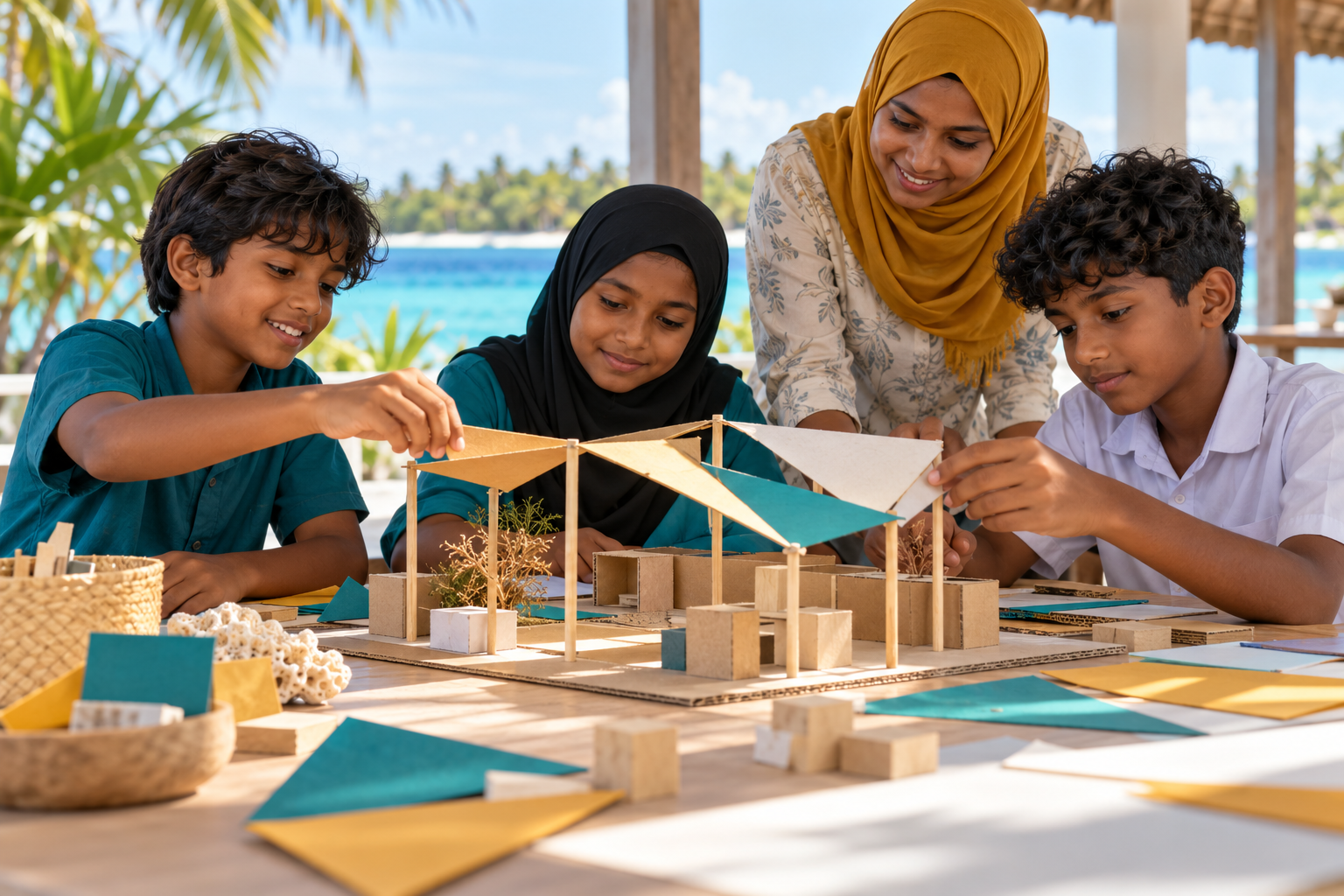
Ask: What problem did you notice? Who might need your idea? What did your test actually show? Which one part could you improve? Compare two versions under the same conditions when you can. Keep every test indoors or at home using small models; no beach visit or public installation is needed.
For ages 5–7, try 10–15 minutes of drawing or pretend play. For ages 8–10, try 15–25 minutes of making and comparing. For ages 11–13, try 25–40 minutes of planning, testing and revision. Take breaks and let children choose a shorter activity.
For families and educators
Try one activity in 15–25 minutes, with breaks as needed. Let children speak, draw, build, or use supported communication. Use paper, cardboard, blocks, and clean reused materials. Adults should handle cutting tools. Test small models, not real bridges, boats, electrical devices, or public installations. Use fictional situations or talk with a trusted adult; children do not need to approach strangers or share personal information.
Celebrate listening, effort, and thoughtful revisions. Game feedback supports reasoning; it does not measure a child's character. The island challenges offer pathways for ages 5–7, 8–10 and 11–13. The other challenges and games were designed for ages 8–10; adapt them to readiness.